Efficacy


TEPEZZA is the first FDA-approved treatment for Thyroid Eye Disease (TED), regardless of disease activity or duration, with over 25,000 patients* treated nationwide, 6 years of real-world experience, and 4 global clinical trials.1-6


*Based on 25,062 individual patients enrolled in Amgen By Your Side who received at least one dose of TEPEZZA from 02/05/2020 - 11/14/2025. TED diagnosis is 
 assumed based on initiation of TEPEZZA.

TEPEZZA: Proven to significantly reduce proptosis in patients with moderate to severe Thyroid Eye Disease (TED)
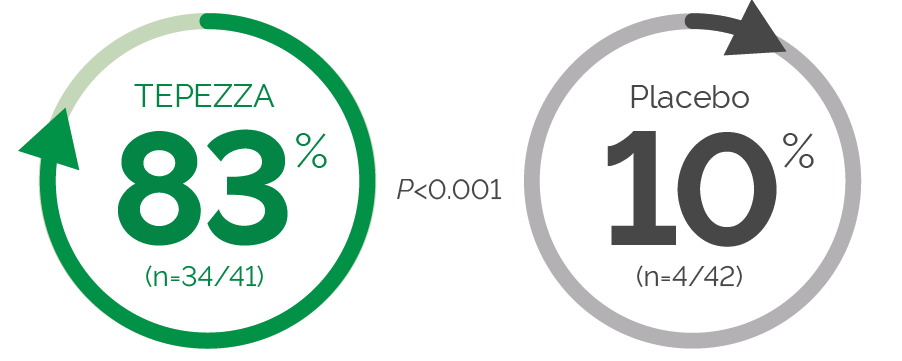
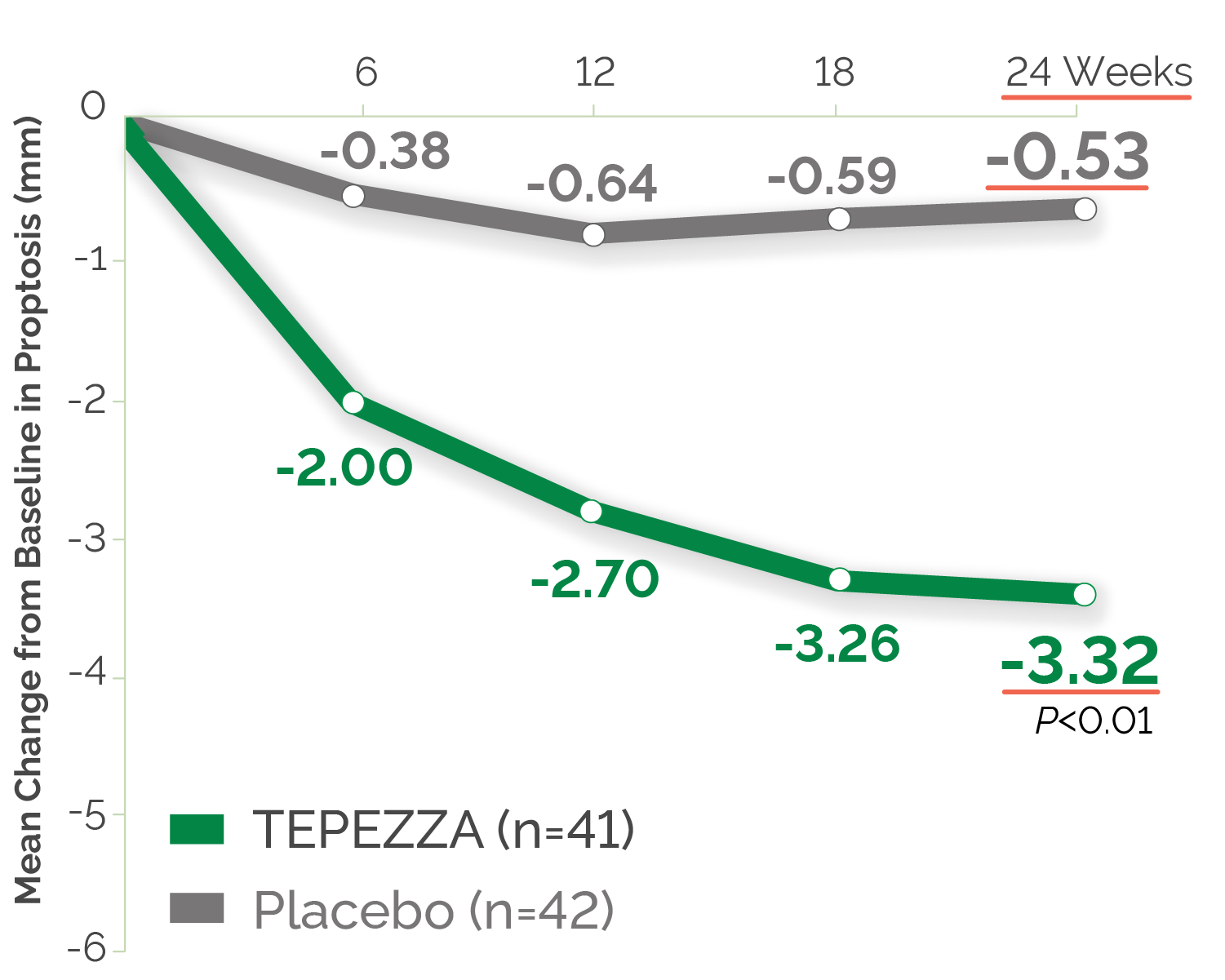
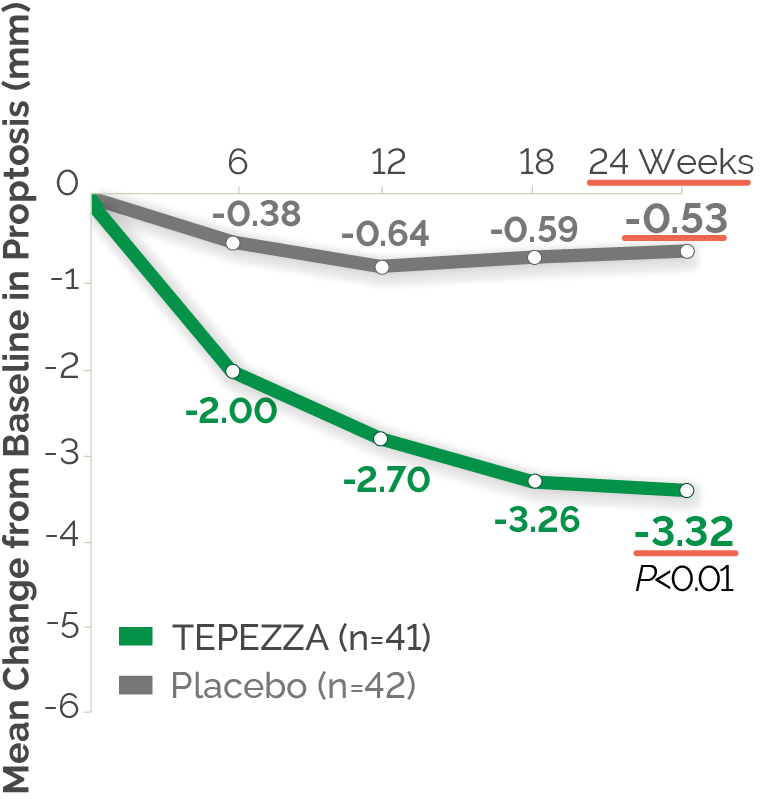
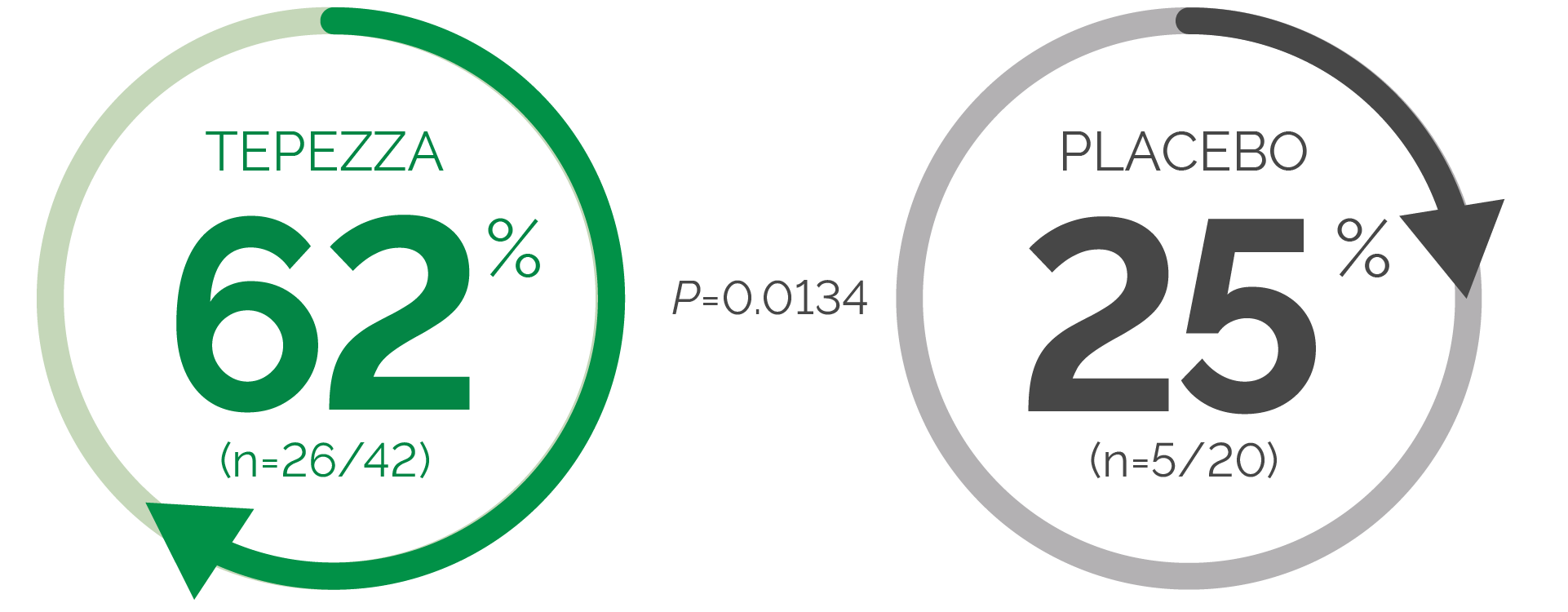
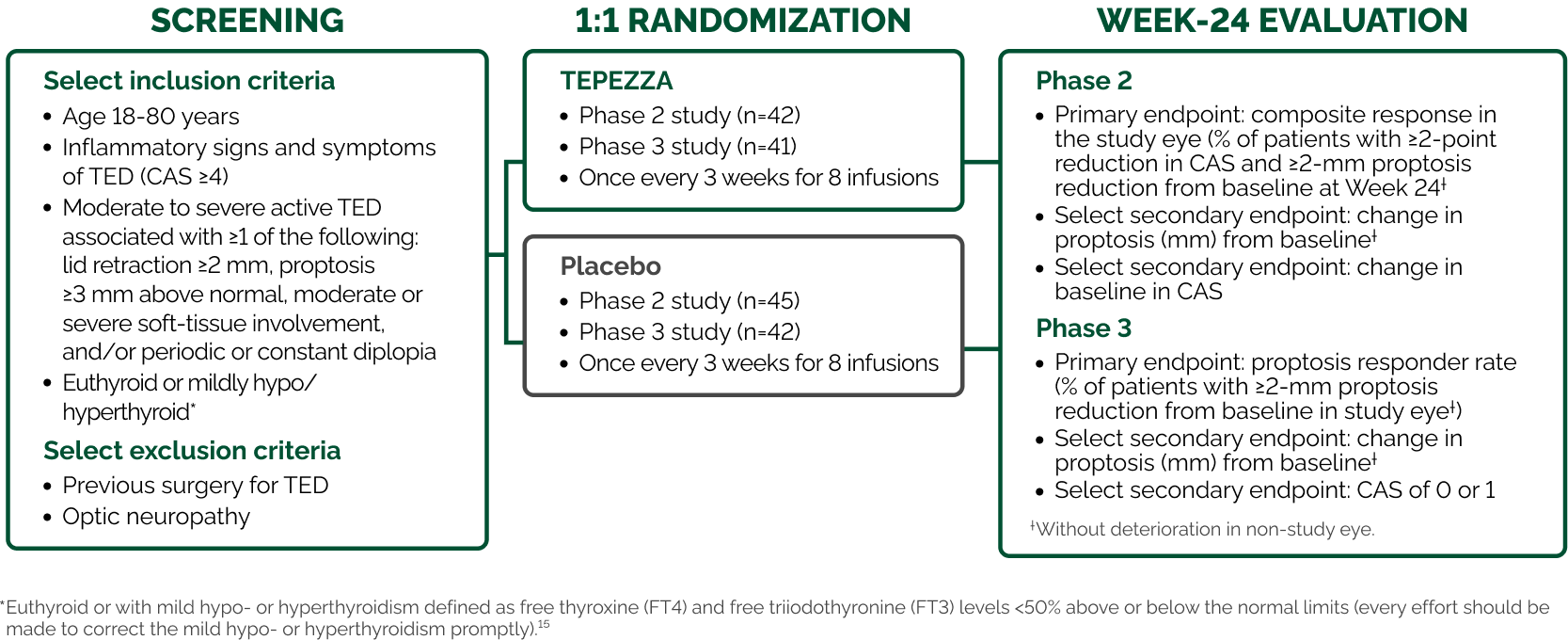
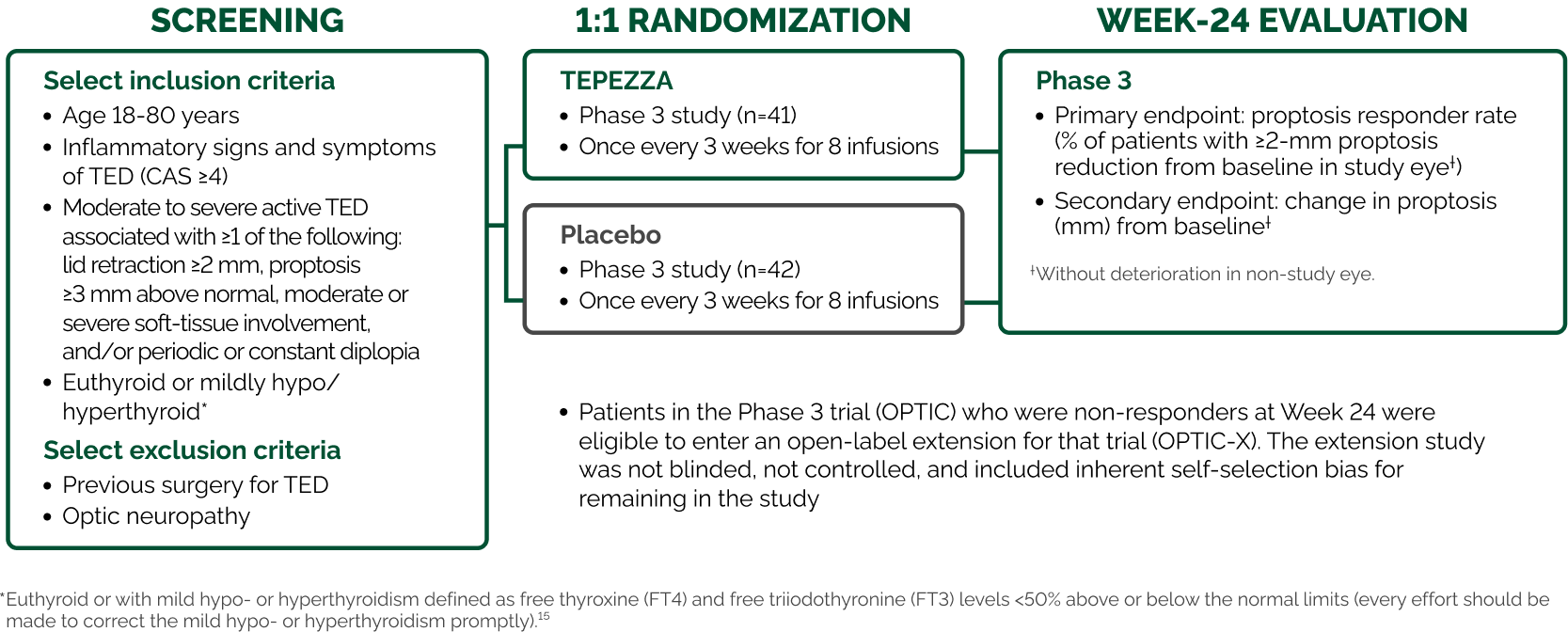
Phase 3 study:

High disease activity, short-duration patients (CAS ≥ 4 and 9 months or less since TED diagnosis at baseline)3

PRIMARY ENDPOINT

Patients achieving a significant ≥2-mm reduction in proptosis at Week 243,*

*A proptosis responder was defined as having a ≥2-mm reduction in proptosis from baseline in the study eye without deterioration (≥2-mm increase in proptosis) in the non-study eye.3

SECONDARY ENDPOINT

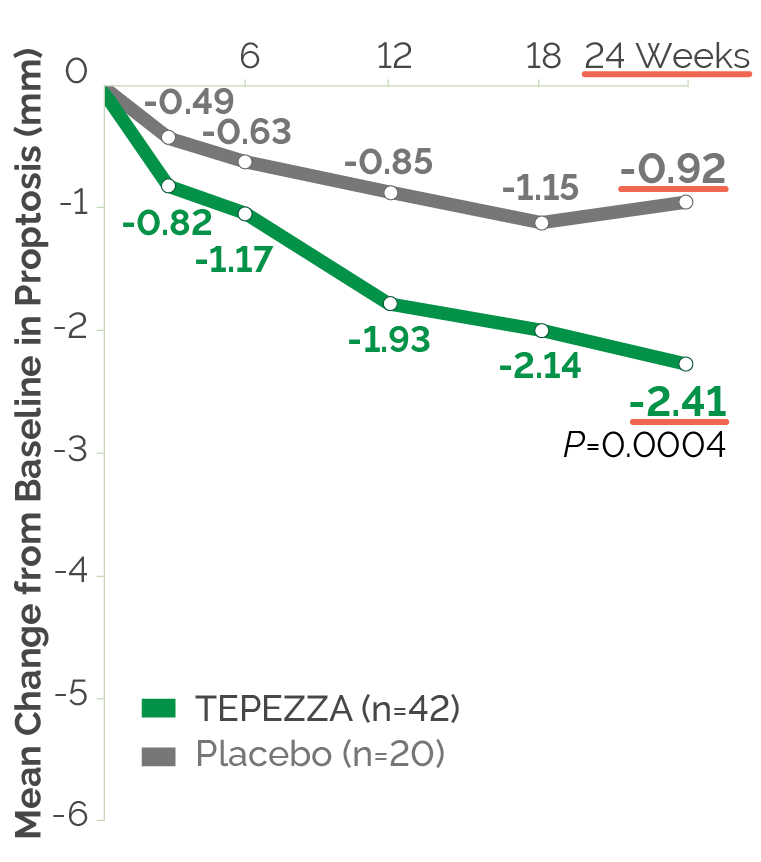
Mean change from baseline in proptosis (mm) at Week 243,7

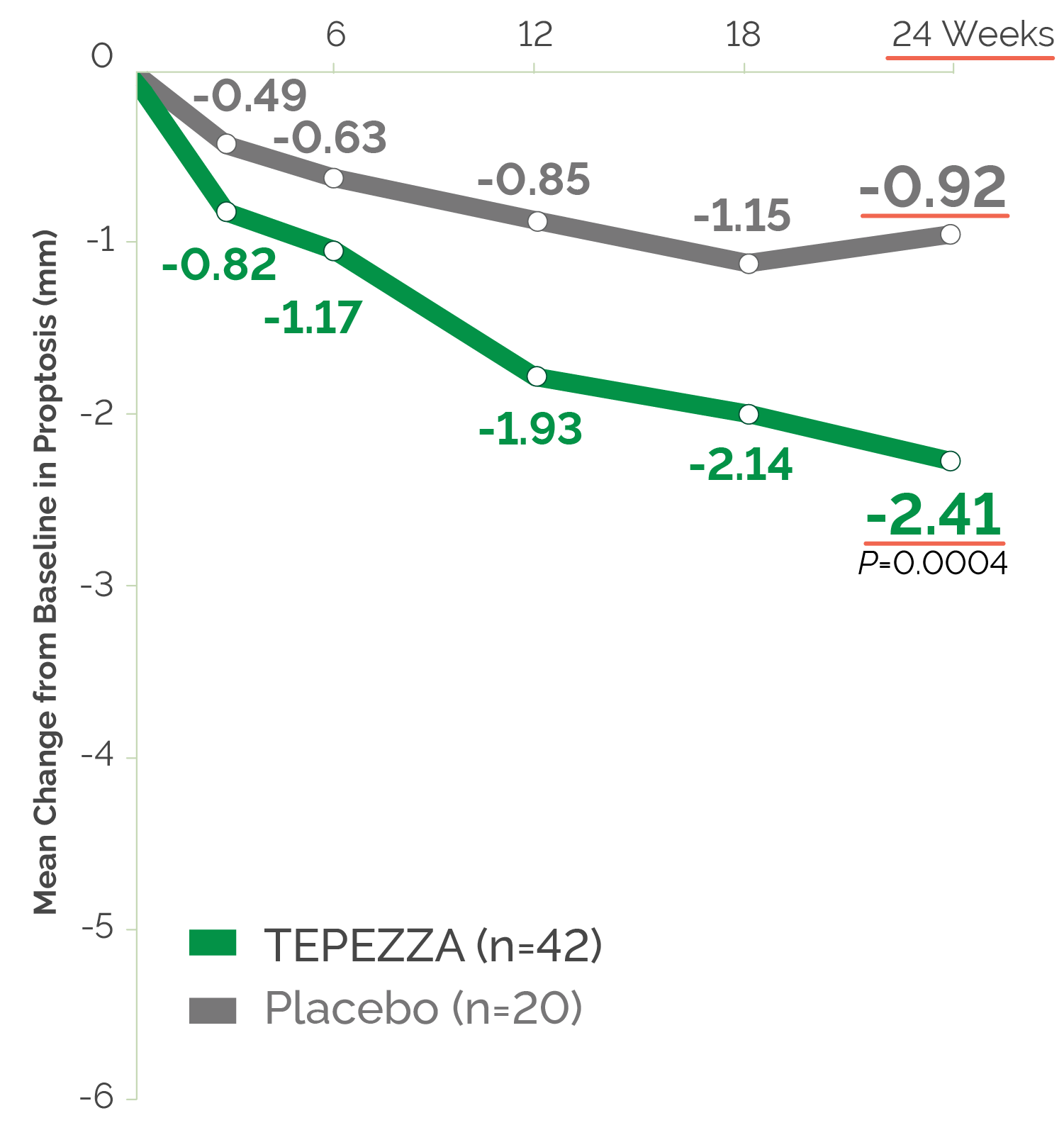
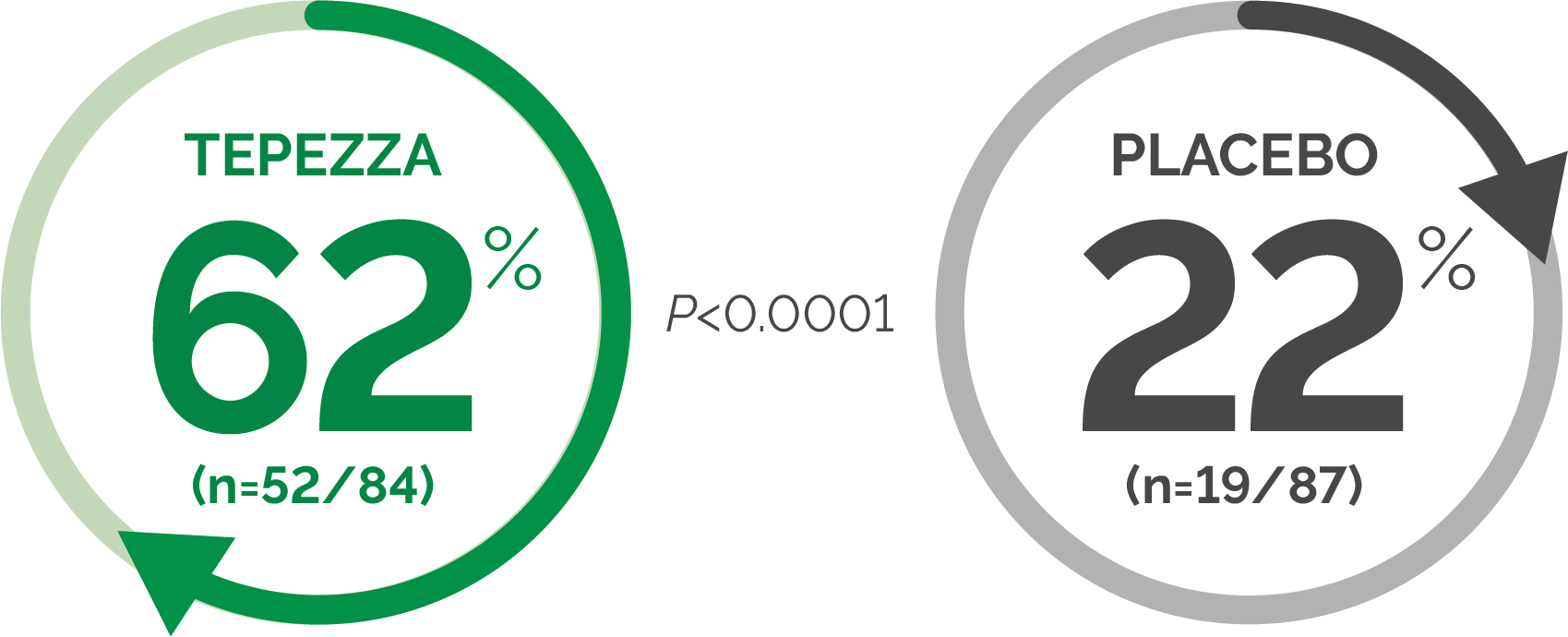
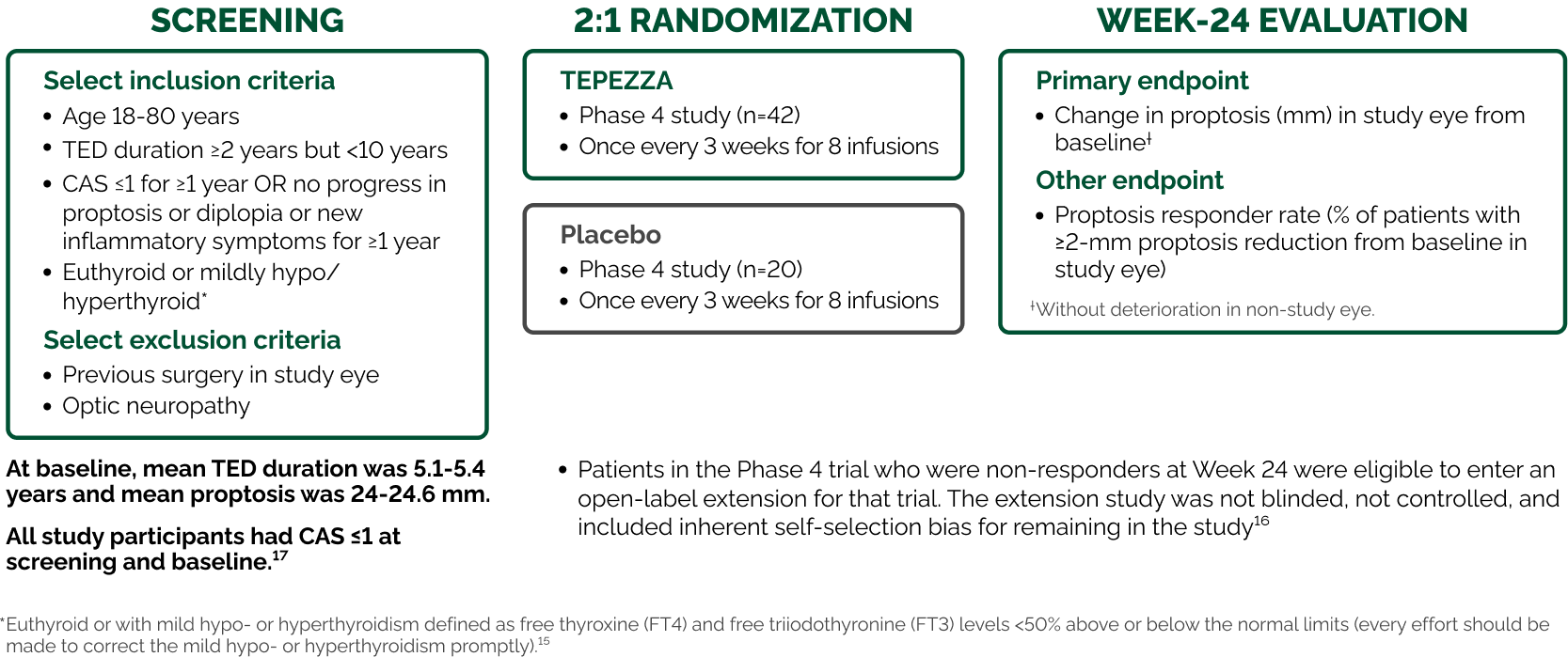
Phase 4 study:

Low disease activity, long-duration patients (CAS ≤ 1 with TED diagnosis for 2-10 years at baseline)6

PRIMARY ENDPOINT

Mean change from baseline in proptosis (mm) at Week 246

SECONDARY ENDPOINT

Patients achieving a significant ≥ 2-mm reduction in proptosis at Week 246,*

*A proptosis responder was defined as having a ≥2-mm reduction in proptosis from baseline in the study eye without deterioration (≥2-mm increase in proptosis) in the non-study eye.6

The benefits of TEPEZZA go beyond proptosis reduction

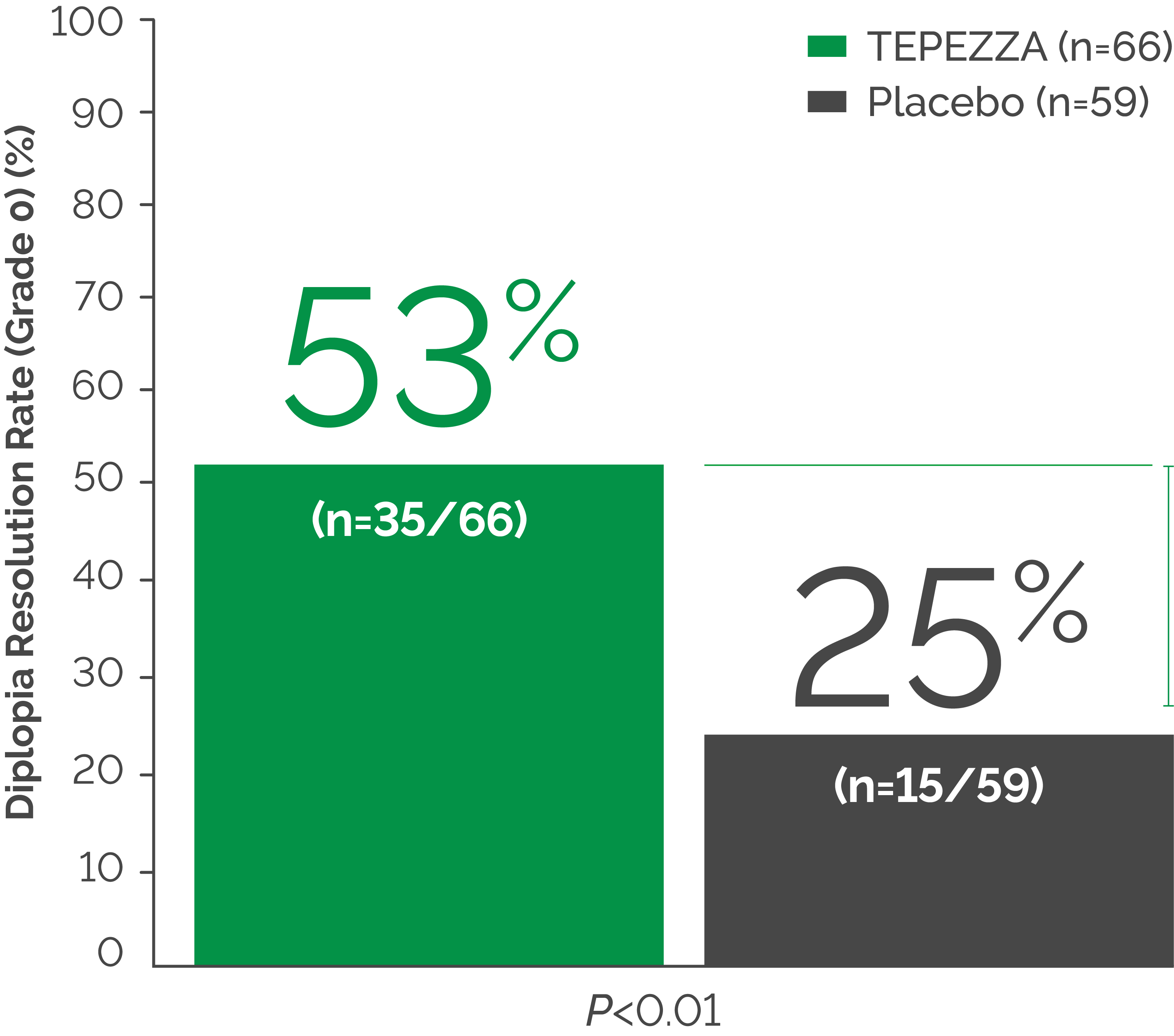
2x more moderate to severe patients with TED had complete diplopia response on TEPEZZA vs placebo8

Phase 2/3 trials: Pooled secondary endpoint; patients with high disease activity, short-duration TED8 (CAS ≥4)

COMPLETE DIPLOPIA RESPONSE

Grade 0 at Week 24 within the subset of patients in the studies with diplopia at baseline (N=125)7

Diplopia was evaluated using the 4-point Gorman scale, in which scores range from 0 for no diplopia to 3 for constant diplopia. A diplopia responder was defined as a patient with baseline diplopia > 0 and a score of 0 at Week 24.7,8


In the Phase 4 trial in patients with chronic TED, no differences between the TEPEZZA and placebo groups were observed for diplopia endpoints. The trial was not powered to detect a treatment difference in diplopia due to the low incidence of diplopia at baseline among the study subjects.6

Nearly 3x more moderate to severe patients experienced reduction in inflammation on TEPEZZA vs placebo8,9

Phase 2/3 trials: Pooled secondary endpoint; patients with high disease activity, short-duration TED8 (CAS ≥4)

IN PATIENTS WITH CAS ≥4 AT BASELINE INFLAMMATORY RESPONSE

CAS 0 or 1, inactive disease state at Week 248,9

The Clinical Activity Score (CAS) is a composite score with equal weighting of each of these seven factors: spontaneous orbital pain, gaze-evoked orbital pain, eyelid swelling that is considered to be due to active TED, eyelid erythema (redness), conjunctival redness considered to be due to active TED, chemosis (swelling of the conjunctiva), and inflammation of the caruncle or plica. However, the factors may not be of equal clinical weight to patients or to physicians treating these patients and as such the clinical meaningfulness is unknown.10

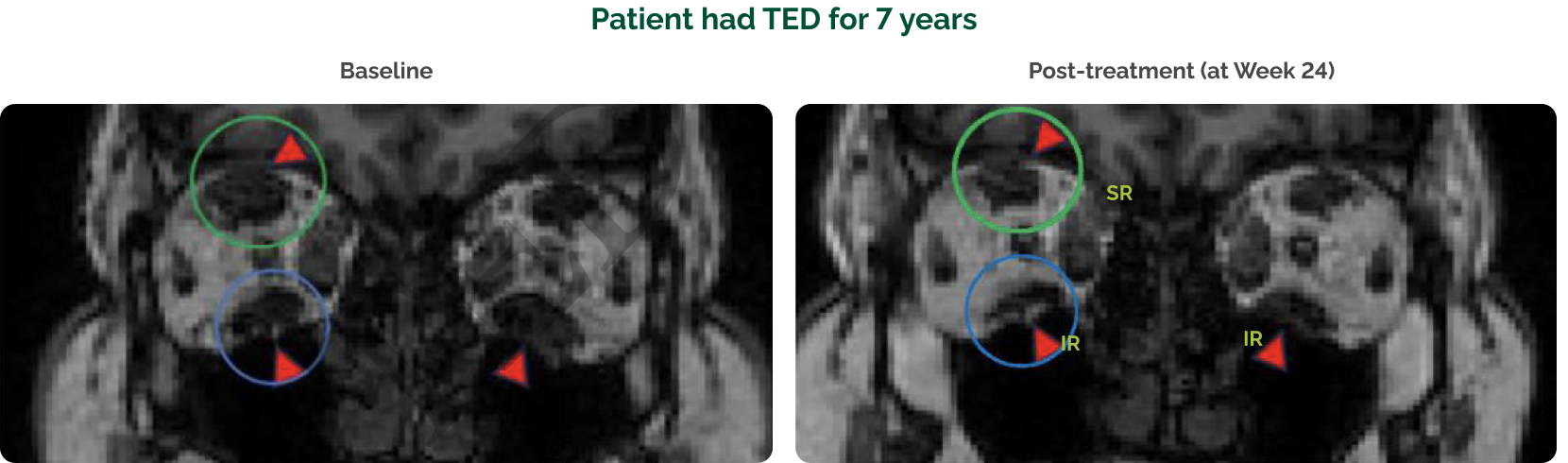
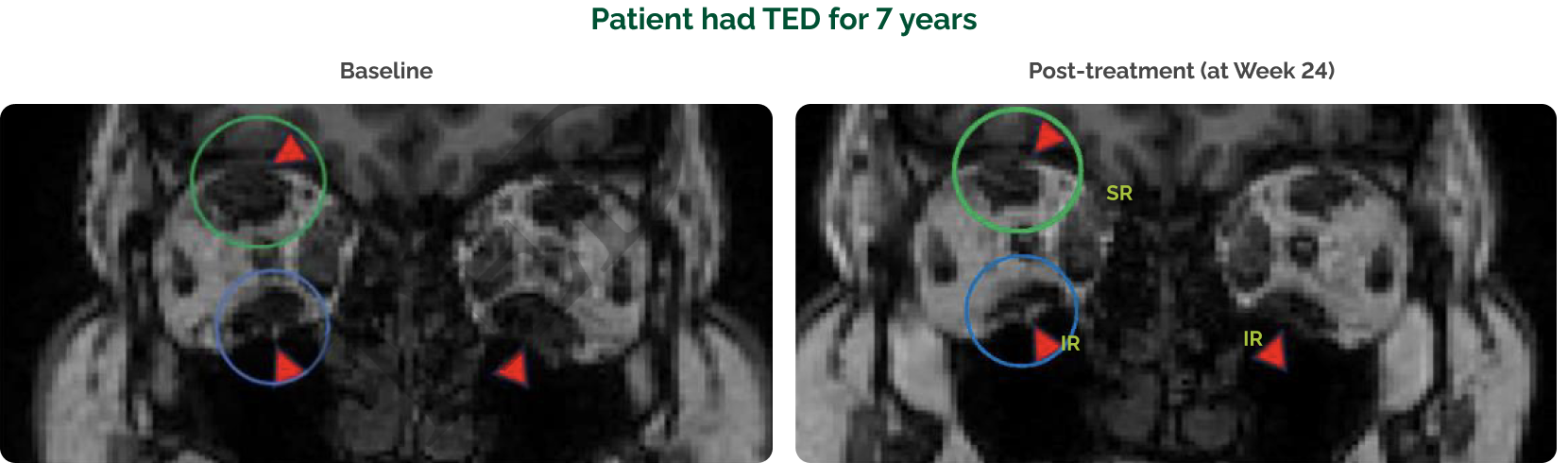
In 6 patients who were assessed, a decrease in orbital fat/muscle volume was observed6

Phase 4 study: Patients with CAS ≥1 with a TED diagnosis for 2-10 years at baseline

reduction in orbital fat

reduction in muscle volume

In observation of 6 TEPEZZA patients who had an orbital MRI (12 eyes total), a decrease in orbital fat and muscle volume was shown. Analysis is exploratory and has not been adjusted for multiple comparisons. No conclusions of statistical or clinical significance can be drawn.6

Green outline of a face with two clouds

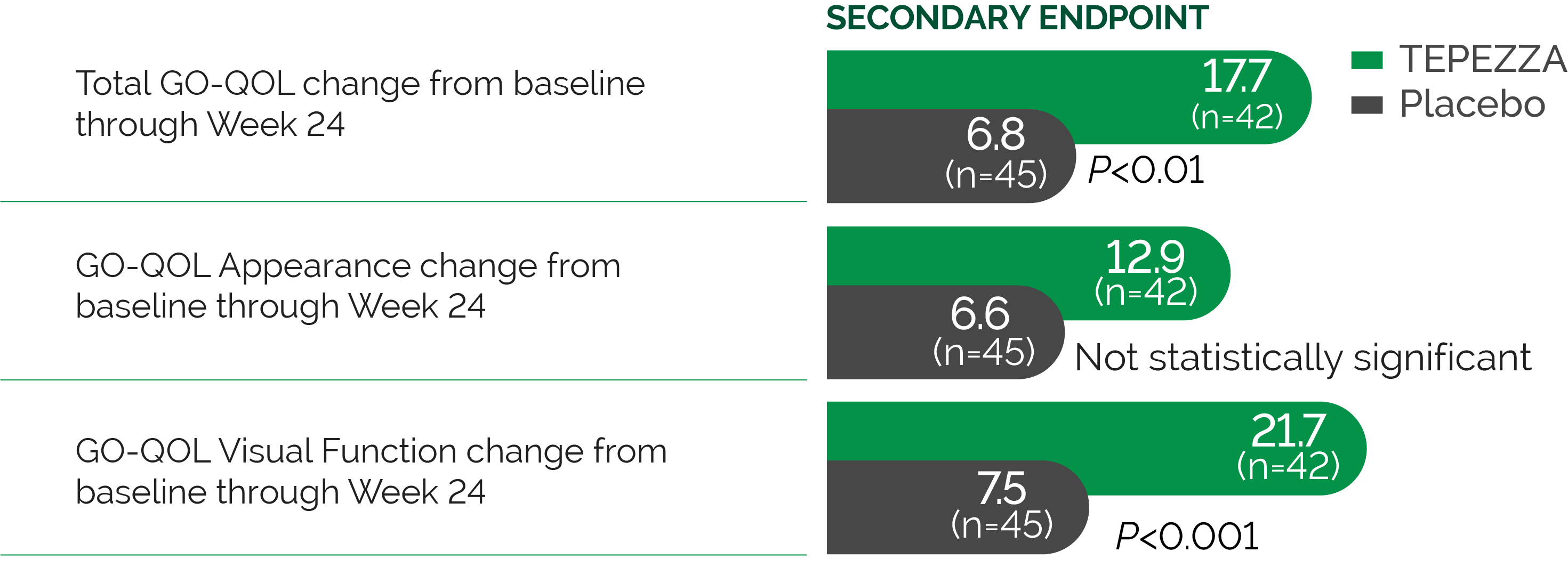
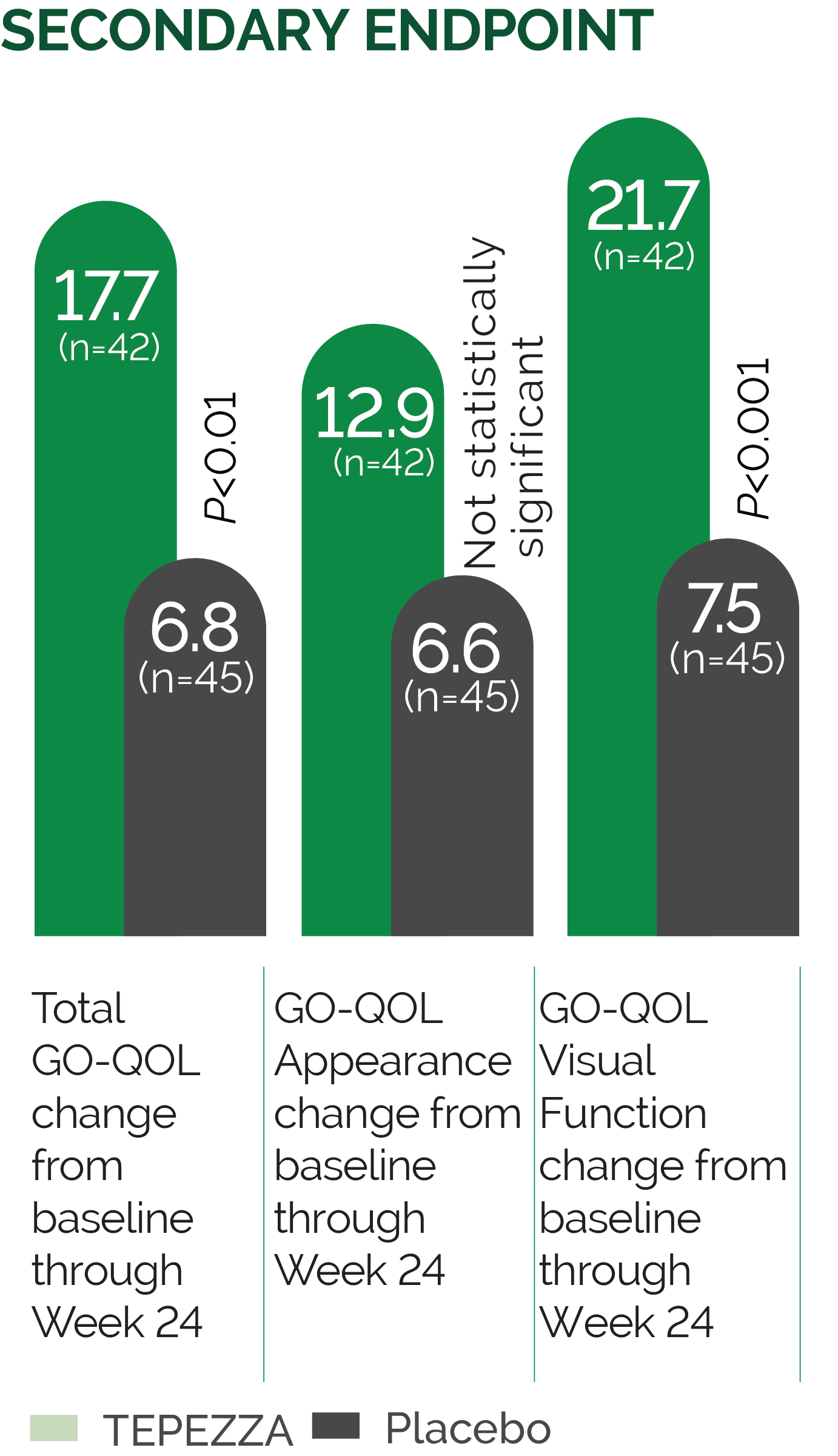
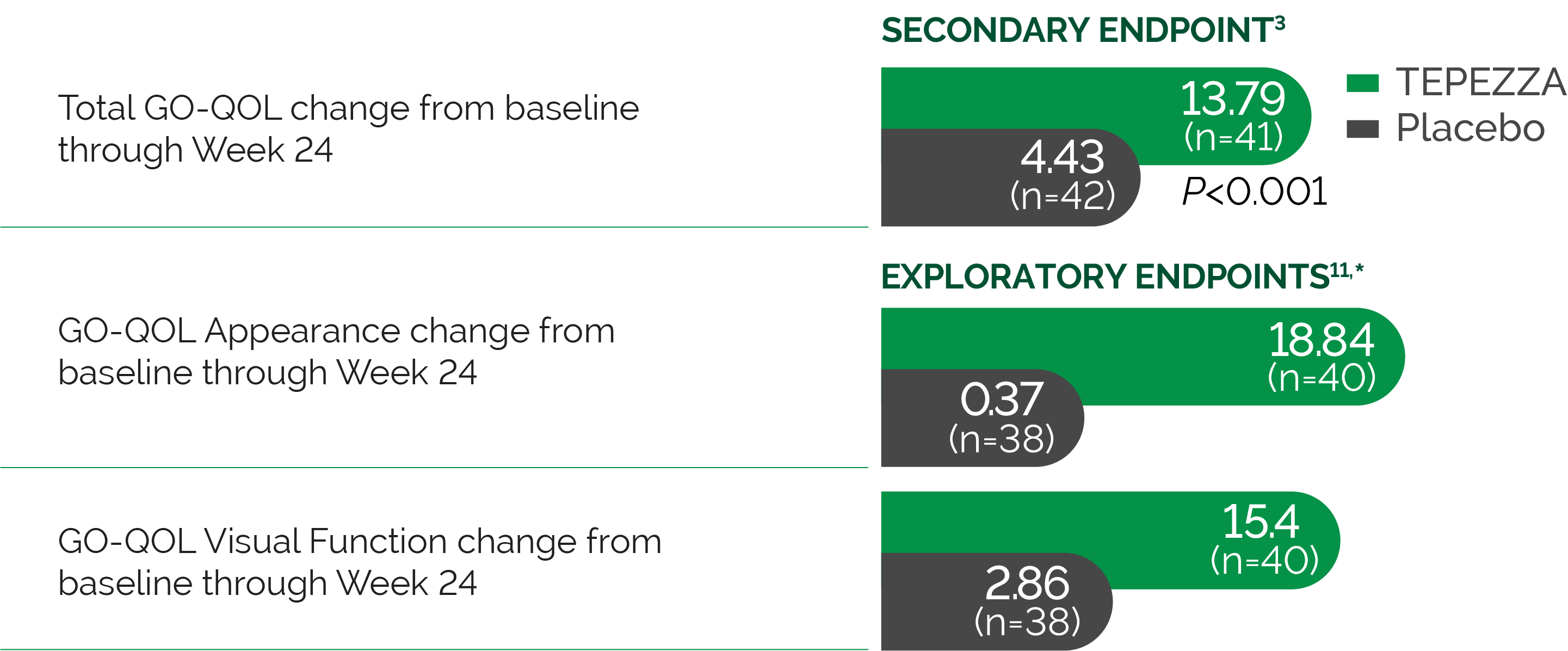
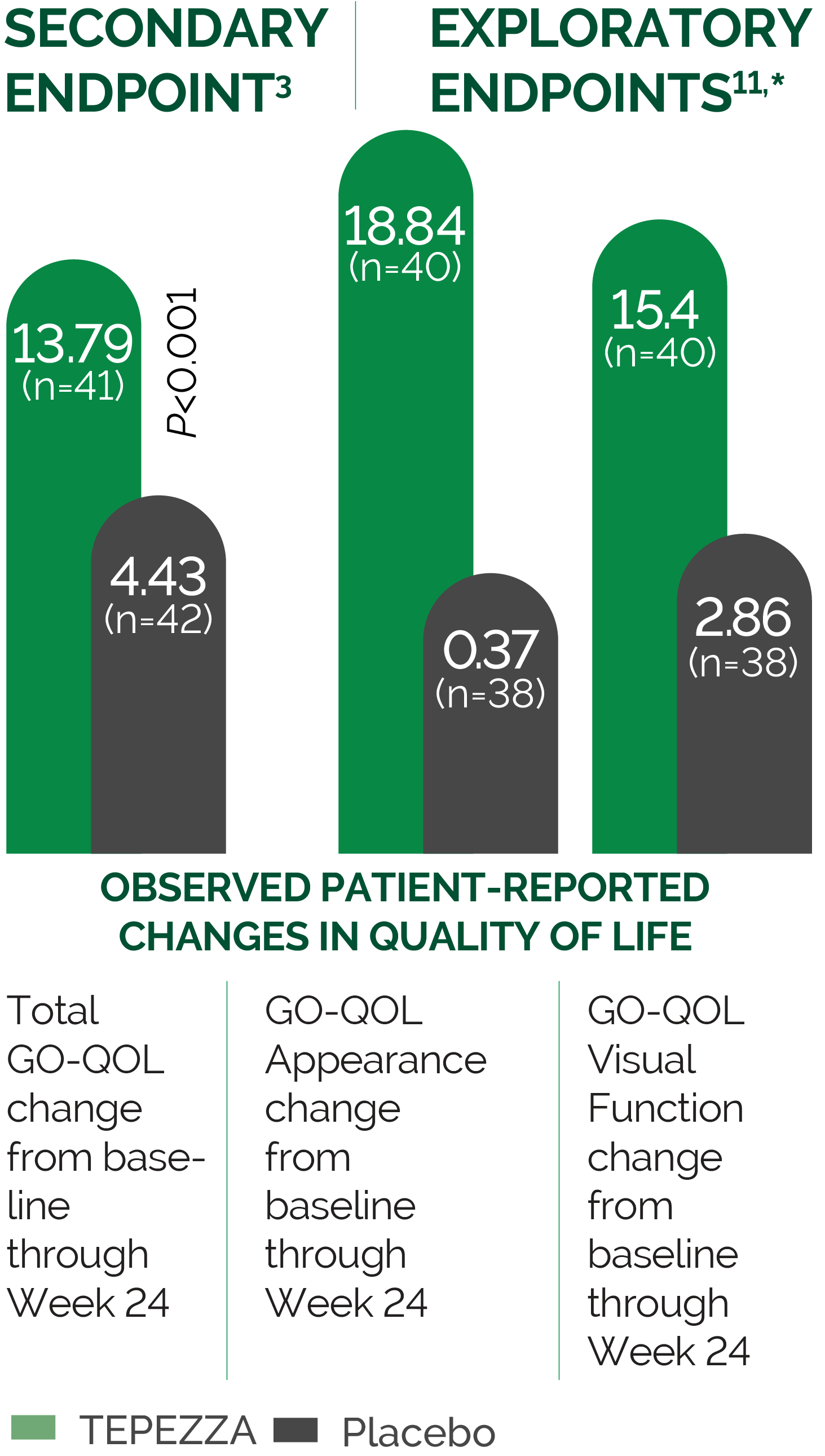
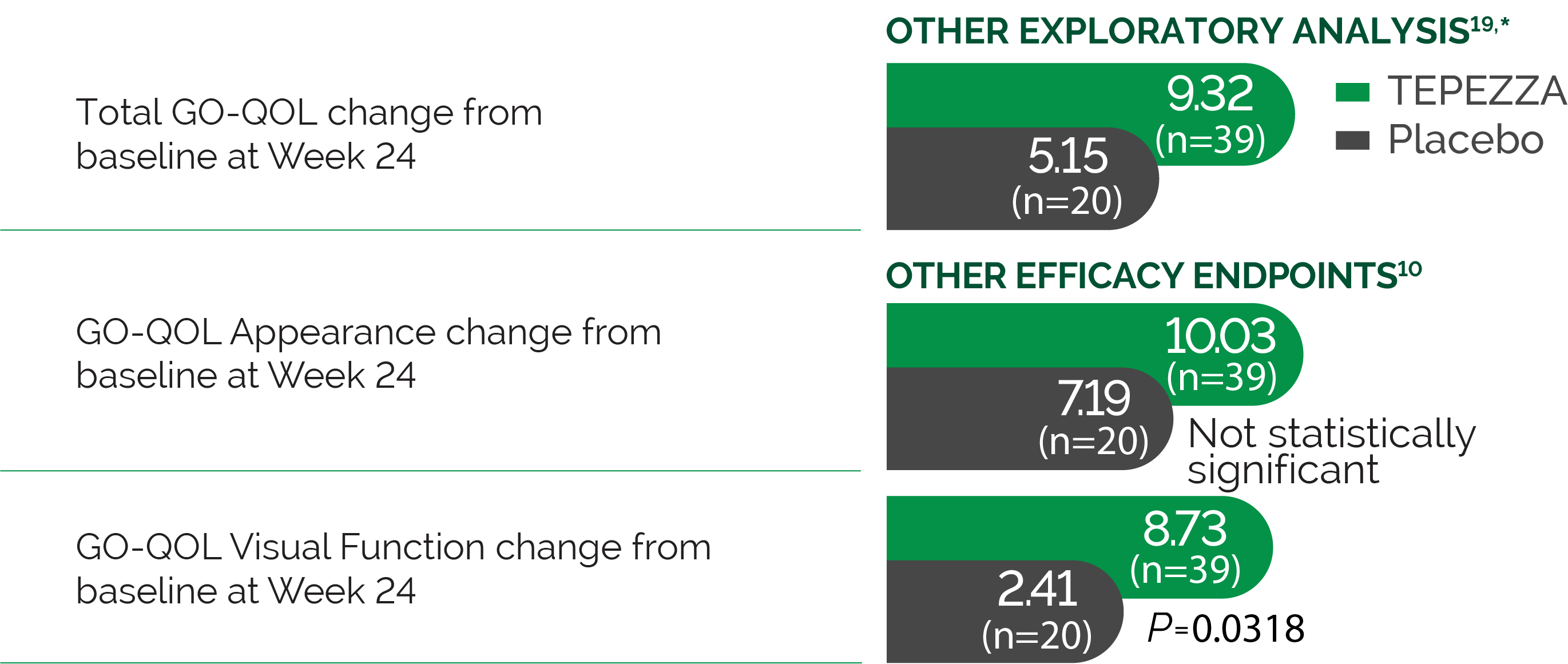
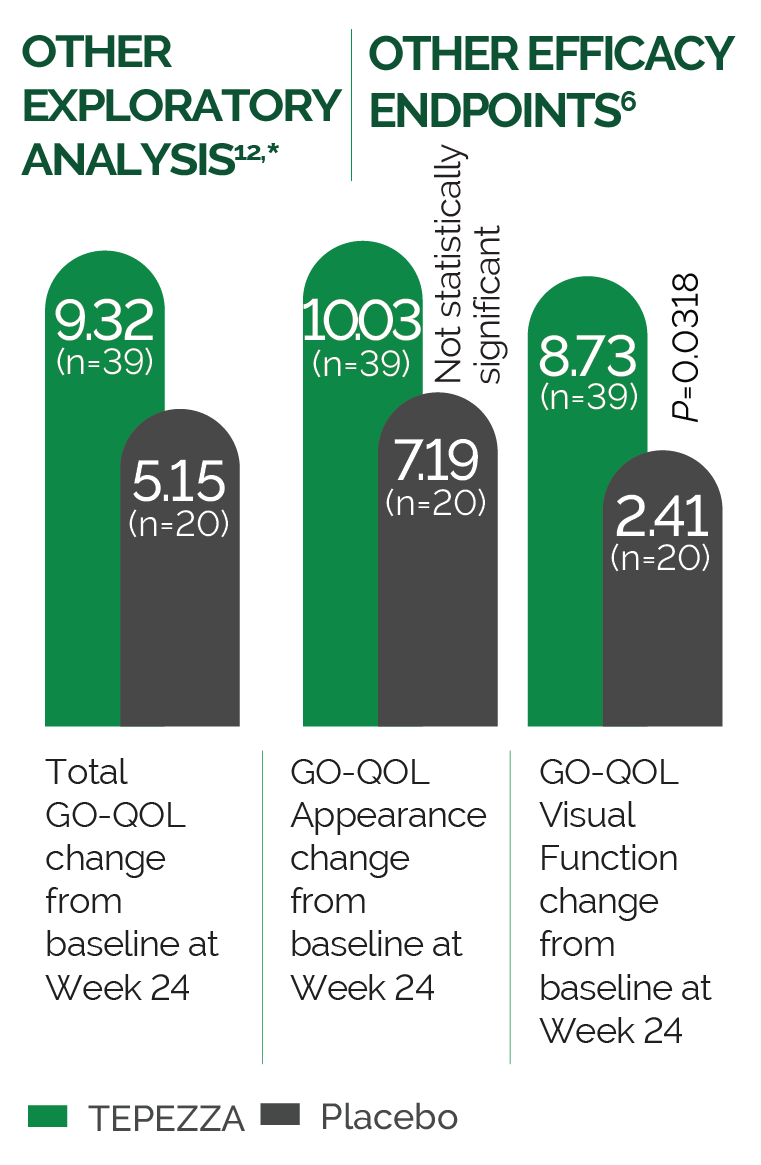
GO-QOL


Changes in several quality-of-life metrics as reported by TEPEZZA patients


As measured by GO-QOL responses in TEPEZZA patients vs those on placebo4

GO-QOL (Graves’ ophthalmopathy quality of life patient-reported questionnaire) is a 16-item self-administered questionnaire divided into 2 subscales that is used to measure changes over time in visual functioning and appearance. Equal weight is assigned to 8 measures of visual functioning and appearance, respectively, however their relative importance is unknown. The GO-QOL is not validated in patients with TED. As such, results should be interpreted with caution.3,13


A mean change of at least 6 is considered clinically meaningful.3,13

Phase 2 study: High disease activity, short-duration patients with CAS ≥44
Phase 3 study: High disease activity, short-duration patients with CAS ≥43

*Analysis is exploratory and has not been adjusted for multiple comparisons. No conclusions of statistical or clinical significance can be drawn.

Phase 4 study: Patients with CAS ≤1 with a TED diagnosis for 2-10 years at baseline6

*Analysis is exploratory and has not been adjusted for multiple comparisons. No conclusions of statistical or clinical significance can be drawn.

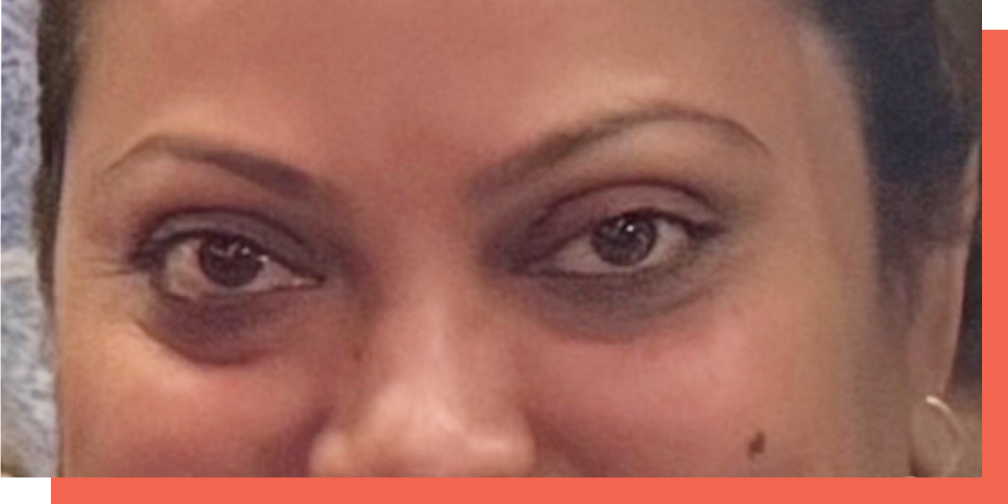
TEPEZZA delivered results patients both see and feel

Bonnie, a real TEPEZZA® patient

Without TEPEZZA, I don’t think that I would have been able to go back to work. When working on a computer all day, the double vision would have made it impossible.

– Bonnie S., real TEPEZZA patient
(compensated for her time)

Exploratory summary of Week 24 responders at Week 72

Observed follow-up analysis from Phase 2 and Phase 3/OPTIC treated patients with available data at Week 7214

Week 24 responders who maintained a response across key endpoints at Week 7214

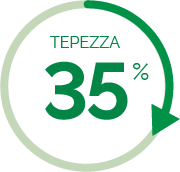
70% (n=35/50)

Proptosis: still had at least 2-mm reduction in proptosis from baseline

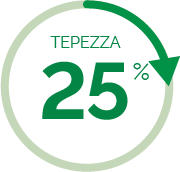
89% (n=31/35)

Diplopia: still had at least one Gorman grade level improvement from baseline

91% (n=49/54)18

CAS: still had at least a 2-point improvement in score from baseline

Important Context

  • Analysis included only Week 24 proptosis responders from Phase 2 and Phase 3/OPTIC who had visits at both Week 24 and Week 72. Patients who experienced a flare exited the follow-up period and are not included14

  • Outcomes included percentages of observed patient responses from baseline, such as Clinical Activity Score (CAS ≥2-point improvement), diplopia (≥1 Gorman grade improvement), and proptosis (≥2-mm improvement)14

  • Studies differed in timing of follow-up visits, and some data were unavailable. Consider limitations of selection bias when interpreting results14

Hear how TEPEZZA changed the treatment landscape in TED

Amina Malik, Oculoplastic Surgeon, discusses her experiences prescribing TEPEZZA to her patients with Thyroid Eye Disease (TED) and the results she has seen with treatment.

youtube-tepezza

I’ve been treating patients with TEPEZZA since 2020.


Dr Malik was compensated for her time. 
The opinions expressed are her own.

Video Transcript

My name is Amina Malik and I'm an oculoplastic surgeon at Houston Methodist Hospital in Houston, Texas.


So I have a busy oculoplastics practice there with a big proportion of patients with thyroid eye disease.


Thyroid eye disease is a very heterogeneous disease. So I think it's important for general practitioners, general ophthalmologists, endocrinologists, just to be aware that it can present in a variety of ways.


So I think it's important general practitioners consider referring to a TED specialist so that they can catch the disease early in the process and uh hopefully optimally treat them.


Thyroid eye disease can be a very debilitating process. I've had more than one patient in my office in tears because of how this disease has affected them.


I've been treating patients with TEPEZZA from the onset since 2020.


TEPEZZA is indicated for the treatment of Thyroid Eye Disease regardless of Thyroid Eye Disease activity or duration.


TEPEZZA may cause infusion reactions. Infusion reactions may occur during an infusion or within 1.5 hours after an infusion.
Please listen to additional Important Safety Information later in this video.


I have had excellent experience in seeing huge impacts on my patients' proptosis, their double vision. Whereas in other patients, they might have
milder disease and yet I've still treated them and have seen really significant improvements there as well. And there is definitely a subset of patients who are very bothered by pressure behind their eyes um and other symptoms that would prompt them to want to pursue treatment with TEPEZZA.


So the spectrum for which I have had experience is quite broad and the results have been really dramatic. When I speak to my patients who have thyroid eye disease who are symptomatic enough to want to consider therapy,


We, I go over the options of TEPEZZA as the first FDA-approved treatment for Thyroid Eye Disease and I'll go over the side effects and potential risks involved. Prior to the development of TEPEZZA, surgery was really the mainstay.


And it's been really remarkable to have something to offer my patients that is a medical option and it's just really exciting to see the gratitude that patients have for the transformations that they’re seeing after treatment with this drug.


IMPORTANT SAFETY INFORMATION
WARNINGS AND PRECAUTIONS


Infusion Reactions: TEPEZZA may cause infusion reactions. Infusion reactions have been reported in approximately 4% of patients treated with TEPEZZA. Reported infusion reactions have usually been mild or moderate in severity. Signs and symptoms may include transient increases in blood pressure, feeling hot, tachycardia, dyspnea, headache, and muscular pain. Infusion reactions may occur during an infusion or within 1.5 hours after an infusion. In patients who experience an infusion reaction, consideration should be given to premedicating with an antihistamine, antipyretic, or corticosteroid and/or administering all subsequent infusions at a slower infusion rate.


Inflammatory Bowel Disease: TEPEZZA may cause an exacerbation of inflammatory bowel disease (IBD). IBD has been reported in some patients without a prior diagnosis of IBD. Monitor patients for signs and symptoms of IBD. If IBD exacerbation is suspected, discontinue use of TEPEZZA.


Hyperglycemia: Increased blood glucose or hyperglycemia may occur in patients treated with TEPEZZA. In clinical trials, 10% of patients (two-thirds of whom had preexisting diabetes or impaired glucose tolerance) experienced hyperglycemia. Hyperglycemic events should be controlled with medications for glycemic control, if necessary. Assess patients for elevated blood glucose and symptoms of hyperglycemia prior to infusion and continue to monitor while on treatment with TEPEZZA. Ensure patients with hyperglycemia or preexisting diabetes are under appropriate glycemic control before and while receiving TEPEZZA.


Hearing Impairment Including Hearing Loss: TEPEZZA may cause severe hearing impairment including hearing loss, which in some cases may be permanent. Assess patients’ hearing before, during, and after treatment with TEPEZZA and consider the benefit-risk of treatment with patients.


ADVERSE REACTIONS


The most common adverse reactions (incidence ≥5% and greater than placebo) are muscle spasm, nausea, alopecia, diarrhea, fatigue, hyperglycemia, hearing impairment, dysgeusia, headache, dry skin, ear discomfort, weight decreased, nail disorders, and menstrual disorders.


Please see Full Prescribing Information or visit TEPEZZAhcp.com for more information.


Talk to your Amgen representative today to learn more about TEPEZZA.
IMPORTANT SAFETY INFORMATION

WARNINGS AND PRECAUTIONS

Infusion Reactions: TEPEZZA may cause infusion reactions. Infusion reactions have been reported in approximately 4% of patients treated with TEPEZZA. Reported infusion reactions have usually been mild or moderate in severity. Signs and symptoms may include transient increases in blood pressure, feeling hot, tachycardia, dyspnea, headache, and muscular pain. Infusion reactions may occur during an infusion or within 1.5 hours after an infusion. In patients who experience an infusion reaction, consideration should be given to premedicating with an antihistamine, antipyretic, or corticosteroid and/or administering all subsequent infusions at a slower infusion rate.
Inflammatory Bowel Disease: TEPEZZA may cause an exacerbation of inflammatory bowel disease (IBD). IBD has been reported in some patients without a prior diagnosis of IBD. Monitor patients for signs and symptoms of IBD. If IBD exacerbation is suspected, discontinue use of TEPEZZA.

Hyperglycemia: Increased blood glucose or hyperglycemia may occur in patients treated with TEPEZZA. In clinical trials, 10% of patients (two-thirds of whom had preexisting diabetes or impaired glucose tolerance) experienced hyperglycemia. Hyperglycemic events should be controlled with medications for glycemic control, if necessary. Assess patients for elevated blood glucose and symptoms of hyperglycemia prior to infusion and continue to monitor while on treatment with TEPEZZA. Ensure patients with hyperglycemia or preexisting diabetes are under appropriate glycemic control before and while receiving TEPEZZA.
Hearing Impairment Including Hearing Loss: TEPEZZA may cause severe hearing impairment including hearing loss, which in some cases may be permanent. Assess patients’ hearing before, during, and after treatment with TEPEZZA and consider the benefit-risk of treatment with patients.

ADVERSE REACTIONS

The most common adverse reactions (incidence ≥5% and greater than placebo) are muscle spasm, nausea, alopecia, diarrhea, fatigue, hyperglycemia, hearing impairment, dysgeusia, headache, dry skin, ear discomfort, weight decreased, nail disorders, and menstrual disorders.

INDICATION

TEPEZZA is indicated for the treatment of Thyroid Eye Disease regardless of Thyroid Eye Disease activity or duration.

Please see Full Prescribing Information for more information.

REFERENCES:

1. U.S. Food and Drug Administration. FDA approves first treatment for thyroid eye disease [Press release]. January 1, 2020. https://www.fda.gov/newsevents/press-announcements/fda-approves-first-treatment-thyroid-eye-disease. 2. Data on File. Amgen, November 2025. 3. Douglas RS, Kahaly GJ, Patel A, et al. Teprotumumab for the treatment of active thyroid eye disease. N Engl J Med. 2020;382(4):341-352. 4. Smith TJ, Kahaly GJ, Ezra DG, et al. Teprotumumab for thyroid-associated ophthalmopathy. N Engl J Med. 2017;376(18):1748-1761. 5. Douglas RS, Kahaly GJ, Ugradar S, et al. Teprotumumab efficacy, safety and durability in longer-duration thyroid eye disease and re-treatment: OPTIC-X study. Ophthalmology. 2022;129(4):438-449. 6. Douglas RS, Couch S, Wester ST, et al. Efficacy and safety of teprotumumab in patients with thyroid eye disease of long duration and low disease activity. J Clin Endocrinol Metab. 2024;109(1):25-35. 7. TEPEZZA (teprotumumab-trbw) [prescribing information] Amgen. 8. Kahaly GJ, Douglas RS, Holt RJ, et al. Teprotumumab for patients with active thyroid eye disease: a pooled data analysis, subgroup analyses, and off-treatment follow-up results from two randomised double-masked placebo-controlled multicentre trials. Lancet Diabetes Endocrinol. 2021;9(6):360-372. 9. Supplement to: Kahaly GJ, Douglas RS, Holt RJ, et al. Teprotumumab for patients with active thyroid eye disease: a pooled data analysis, subgroup analyses, and off-treatment follow-up results from two randomised double-masked placebo-controlled multicentre trials. Lancet Diabetes Endocrinol. 2021;9(6):360-372. 10. Barrio-Barrio J, Sabater AL, Bonet-Farriol E, et al. Graves’ ophthalmopathy: VISA versus EUGOGO classification, assessment, and management. J Ophthalmol. 2015;2015:249125. 11. Data on File. Amgen, May 2019. 12. Data on File. Amgen, March 2023. 13. Bartley GB. The epidemiologic characteristics and clinical course of ophthalmopathy associated with autoimmune thyroid disease in Olmsted County, Minnesota. Trans Am Ophthalmol Soc. 1994;92:477-588. 14. Kahaly GJ, Subramanian PS, Conrad E, et al. Long-term efficacy of teprotumumab in thyroid eye disease: follow-up outcomes in three clinical trials. Thyroid. 2024;34(7):880-889. 15. Supplement to: Douglas RS, Kahaly GJ, Patel A, et al. Teprotumumab for the treatment of active thyroid eye disease. N Engl J Med. 2020;382(4):341-352. 16. Subramanian PS, Couch S, Wester ST, et al. Teprotumumab efficacy and safety in an open-label extension in patients with chronic, low activity thyroid eye disease. Poster presented at: Annual Meeting of the North American Neuro-Ophthalmology Society (NANOS); March 15-20, 2025; Tucson, AZ. 17. Supplement to: Douglas RS, Couch S, Wester ST, et al. Efficacy and safety of teprotumumab in patients with thyroid eye disease of long duration and low disease activity. J Clin Endocrinol Metab. 2024;109(1):25-35.